Priority Queue Architecture for AI Agent Task Scheduling: Why FIFO Ordering Wastes Your Most Expensive Compute
Your agent fleet processes tasks in arrival order. Meanwhile, a critical customer-facing workflow waits behind fifty low-priority batch jobs. Priority queue architecture is the scheduling discipline that production agent systems need but rarely implement correctly.
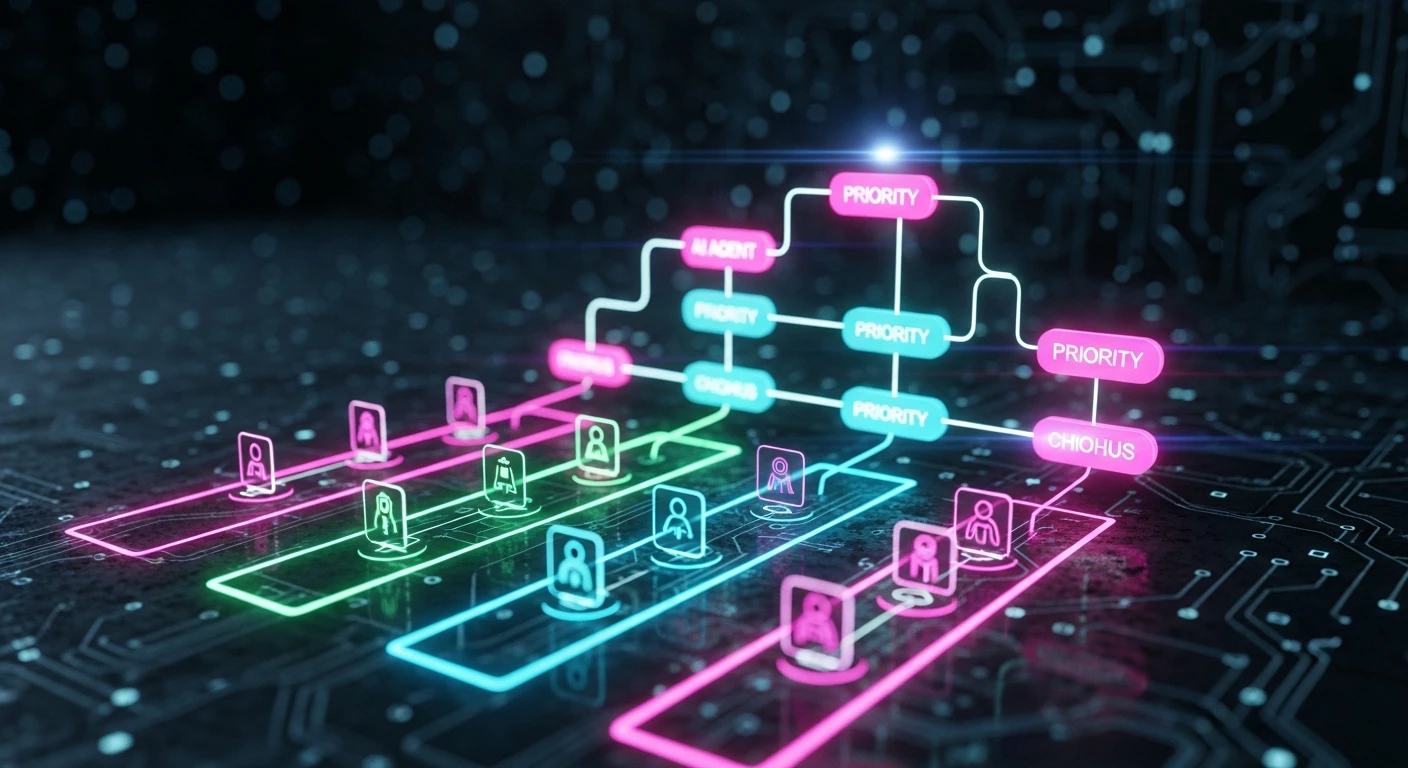
The FIFO Trap in Agent Orchestration
Every production AI agent system starts with a queue. Tasks arrive, agents consume them, results flow back. The default implementation is FIFO: first in, first out. It is simple, fair, and catastrophically wrong for production workloads.
Here is why: AI agent compute is expensive. A single complex reasoning chain might cost dollars in LLM inference. When you process tasks in arrival order, you are making an implicit statement that all tasks have equal urgency and equal value. In practice, they never do. A real-time customer support agent handling a live conversation cannot wait behind a batch of scheduled report generation tasks. An anomaly detection pipeline that found a security incident cannot queue behind routine data classification jobs.
The problem compounds with scale. At ten tasks per minute, FIFO is tolerable. At a thousand, priority inversion becomes a production incident. Your most valuable workloads starve while your cheapest batch jobs consume all available agent capacity.
This is not a hypothetical scaling concern. It is the same class of problem that makes backpressure patterns essential for agent systems — unbounded, unstructured queues create failure modes that only manifest under real production load.
Priority Dimensions for Agent Workloads
Traditional priority queues use a single numeric priority. Agent workloads require multi-dimensional priority because a single number cannot capture the scheduling semantics:
Latency sensitivity. Some tasks have hard real-time constraints (customer-facing chat, live API responses). Others are soft real-time (notifications within minutes). Others are batch (nightly report generation). This dimension determines the penalty for delay.
Business value. Not all tasks generate equal value. A task serving an enterprise customer on a premium tier outranks a free-tier request. A revenue-generating workflow outranks an internal analytics job. This dimension determines the opportunity cost of starvation.
Computational cost. A task that requires a single LLM call differs fundamentally from a task that requires a multi-step agent chain with tool calls. Scheduling must account for the resource footprint: a single high-cost task can block an entire worker pool if not managed correctly.
Dependency urgency. Some tasks are blocking other tasks downstream. A document processing job that feeds into five customer reports has higher effective priority than an isolated task because its delay multiplies across dependents. The event-driven architecture patterns that production systems use make these dependency chains explicit and schedulable.
Deadline proximity. A low-priority task approaching its SLA deadline must be promoted. Without deadline-aware scheduling, you either over-provision (expensive) or violate SLAs (destructive).
Architecture Patterns That Work
Multi-level feedback queues. Borrow from operating system scheduling. Maintain separate queues per priority tier with different consumption rates. Critical queues get dedicated agent workers that never steal from batch queues. Batch queues get remaining capacity. This guarantees that critical tasks never starve regardless of batch volume.
Weighted fair queuing. When strict priority creates starvation risk for low-priority work (which eventually becomes high-priority through deadline pressure), implement weighted scheduling. Critical tasks get 70% of compute slots, standard gets 25%, batch gets 5%. Adjust weights based on observed queue depth and SLA pressure.
Priority inheritance for agent chains. When a high-priority task spawns subtasks through tool calls or agent delegation, those subtasks must inherit the parent priority. Without inheritance, a priority-1 customer request spawns priority-default subtasks that queue behind batch work, defeating the entire scheduling hierarchy. This connects directly to how deterministic control planes enforce boundaries in agentic systems — your scheduler must understand the full task lineage.
Preemption with checkpoint-resume. For long-running agent tasks (multi-step research, document processing chains), implement preemption. When a critical task arrives and no workers are available, pause the lowest-priority in-progress task at its next safe checkpoint and reassign the worker. The patterns for checkpoint and replay in long-running agents become essential infrastructure here — you cannot preempt what you cannot safely pause.
The Cost Modeling Problem
Priority scheduling without cost awareness creates a different pathology: priority inversion through resource exhaustion. A stream of high-priority tasks that each require expensive model inference (GPT-4 class, long context windows) can exhaust your inference budget while low-priority tasks that need cheap models (small classifiers, embeddings) accumulate indefinitely.
The solution is dual-resource scheduling. Your priority queue must respect both compute priority AND budget constraints simultaneously. Implement per-priority-tier budget caps with spillover rules. Critical tasks get unlimited budget access. Standard tasks have hourly budget limits. Batch tasks use remaining budget after higher tiers are satisfied. This mirrors the cost engineering principles for LLM applications but applied at the scheduling layer rather than the inference layer.
Observability for Priority Systems
A priority queue without observability is a priority queue you cannot trust. Instrument these metrics:
Queue depth per priority tier. Sustained depth in critical queues indicates under-provisioning. Growing depth in batch queues approaching SLA deadlines indicates promotion pressure building.
Wait time percentiles per tier. P50 and P99 wait times reveal whether your priority guarantees hold under load. A critical task waiting more than your latency SLA — even once — is a production incident.
Priority inversions per hour. Count how often a lower-priority task completes before a higher-priority task that arrived earlier. Any non-zero rate in your critical tier means your scheduling has bugs.
Starvation detection. Track the longest-waiting task in each tier. If any task exceeds its maximum acceptable wait time, your scheduling is creating starvation. Alarm on it before customers notice. This telemetry connects to the broader observability practices for AI systems that distinguish production-grade systems from prototypes.
Preemption rate and resume latency. If you implement preemption, track how often tasks are preempted and how long resume takes. High preemption rates indicate your capacity is structurally insufficient for your priority mix. High resume latency indicates your checkpoint mechanism needs optimization.
Implementation Antipatterns
Priority as an afterthought. Teams build the agent system first, add priority "later." By then, the entire consumption pattern assumes FIFO semantics. Workers, result handlers, retry logic, observability — all built without priority awareness. Retrofitting priority is an architectural overhaul, not a feature flag.
Too many priority levels. Five tiers maximum. When everything is "high priority," nothing is. Most systems need three: critical (real-time, customer-facing), standard (minutes-acceptable latency), and batch (hours-acceptable). Adding more creates classification overhead without scheduling benefit.
Static priority assignment. Priority assigned at task creation and never updated. In reality, a batch task approaching its SLA deadline should promote. A standard task that has waited 10x its expected time should escalate. Priority must be dynamic based on aging, deadline proximity, and downstream impact.
No backpressure integration. Your priority queue fills faster than agents can consume. Without backpressure signaling to producers, the queue grows unbounded, memory explodes, and all priorities fail simultaneously. Priority scheduling and backpressure are complementary, not alternative solutions.
The Production Implementation Path
Start with three priority tiers. Instrument queue depth and wait time per tier. Run for two weeks measuring your actual workload distribution. Then implement the scheduling discipline appropriate to your observed pattern. Most teams discover they need weighted fair queuing with deadline-based promotion — not strict priority — because their workloads mix latency-sensitive and throughput-sensitive tasks in patterns that strict priority handles poorly.
The organizations running production agent fleets successfully — the ones whose systems handle thousands of concurrent tasks without priority inversion or starvation — all arrived at the same architectural conclusion: scheduling is not infrastructure plumbing. It is the policy layer that determines whether your most expensive AI compute serves your most valuable business outcomes. Treat it accordingly.
Founder & Principal Architect
Ready to explore AI for your organization?
Schedule a free consultation to discuss your AI goals and challenges.
Book Free Consultation