RAG Architecture Patterns That Actually Scale: Lessons From Production Systems
Your RAG prototype works great on 100 documents. At 10 million, it falls apart. The architecture patterns that survive production are fundamentally different from what the tutorials teach.
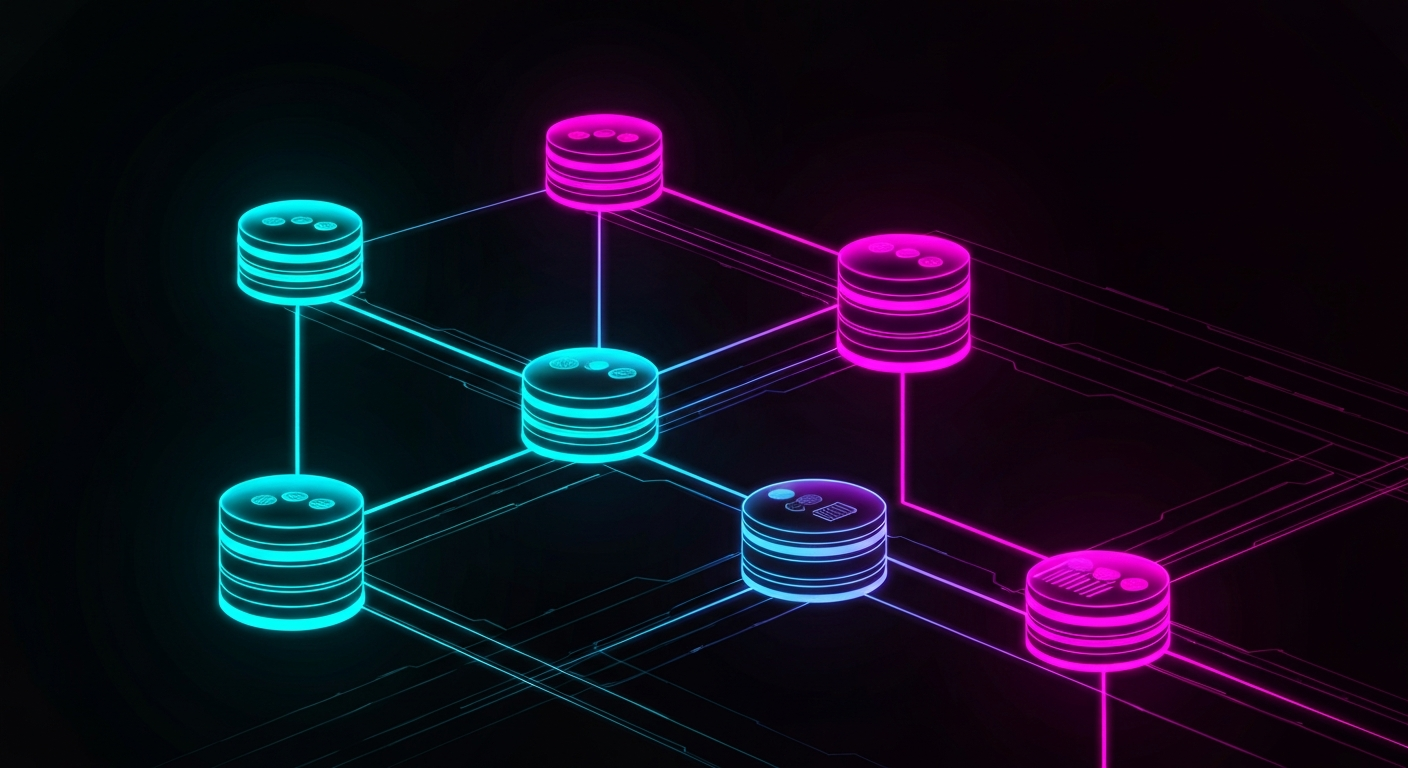
Every enterprise AI team has the same story. The RAG prototype was magical. You loaded a few hundred documents into a vector database, wired up a retrieval step before generation, and suddenly your LLM could answer questions about your business. The demo crushed it. Leadership approved the production budget.
Six months later, you're drowning. The system that worked beautifully on your curated demo corpus falls apart when it hits the real document landscape — millions of files across dozens of formats, contradictory information, stale data, and queries that require reasoning across multiple sources. Your retrieval precision has cratered. Users are getting confidently wrong answers. And you're starting to wonder if RAG was the right architecture at all.
It was. But the tutorial-grade architecture wasn't. Here are the patterns that separate RAG systems that scale from RAG systems that collapse.
Pattern 1: Hierarchical Chunking With Metadata Enrichment
The default tutorial approach — split documents into fixed-size chunks, embed them, store in a vector DB — works until it doesn't. The failure mode is predictable: at scale, naive chunking destroys context.
A 500-token chunk from the middle of a 40-page contract loses critical information: which contract? Between which parties? What section? What date? Without this metadata, the retrieval step returns chunks that are semantically similar to the query but contextually useless.
The production pattern: hierarchical chunking with rich metadata.
Instead of flat chunks, build a three-level hierarchy:
- Document level — metadata about the source (title, date, author, document type, access permissions)
- Section level — structural units within the document (chapters, sections, clauses) with inherited document metadata plus section-specific context
- Chunk level — the actual text fragments for embedding, each carrying the full metadata chain from document → section → chunk
Every chunk in your vector store should carry enough metadata that the retrieval step can filter, boost, and contextualize results before they ever reach the generation model. This is the difference between "here are 10 semantically similar chunks" and "here are the 10 most relevant chunks from current, authorized documents in the correct domain."
The metadata enrichment step is also where you handle one of the hardest problems at scale: temporal relevance. When your corpus contains five versions of the same policy document, naive semantic search returns chunks from all five. Metadata-aware retrieval can filter to the current version — or, when the query is about historical changes, deliberately include multiple versions with temporal context.
This is fundamentally a knowledge layer problem. The vector store isn't the knowledge — it's an index. The knowledge layer includes the metadata graph, the temporal model, and the access control layer that together determine what's relevant.
Pattern 2: Query Decomposition and Routing
Production queries are nothing like demo queries. Demo queries are clean, specific, and match the vocabulary of your documents. Production queries are ambiguous, multi-faceted, and often require information from multiple domains.
"What's our exposure on the Meridian account?" seems like a simple question. But answering it requires pulling from the CRM (account status), the contract management system (terms and obligations), the financial system (outstanding invoices), and possibly the risk management system (flagged concerns). No single retrieval step against a unified vector store will get this right.
The production pattern: query decomposition with domain-aware routing.
Before retrieval, a planning step analyzes the query and decomposes it:
- Intent classification — what type of answer does the user need? (factual lookup, comparison, analysis, summarization)
- Domain routing — which knowledge domains are relevant? (contracts, financials, CRM, policies)
- Sub-query generation — break complex queries into atomic retrieval operations
- Aggregation strategy — how should results from multiple retrievals be combined?
This is where compound AI system architecture becomes essential. Your RAG system isn't one pipeline — it's an orchestrated set of specialized retrieval and reasoning components, each optimized for different data types and query patterns.
The routing layer also handles a critical production concern: cost management. Not every query needs to hit every knowledge domain. A simple policy lookup doesn't need to query the financial system. Routing keeps retrieval focused and latency manageable, even as your total corpus grows into the millions of documents.
Pattern 3: Retrieval Quality Feedback Loops
Here's the pattern that separates teams who build RAG systems from teams who run them: closed-loop evaluation of retrieval quality.
In production, retrieval precision degrades silently. New documents get ingested that create semantic overlap with existing chunks. Query patterns shift as users discover new use cases. The embedding model's weaknesses become more apparent as edge cases accumulate. Without monitoring, you're flying blind.
The production pattern: continuous retrieval evaluation with automated quality signals.
Build three feedback loops:
Loop 1: Retrieval relevance scoring. For every generation, use a lightweight model to score how relevant the retrieved chunks were to the query. This gives you a continuous signal on retrieval precision without requiring human evaluation. When the relevance score drops below threshold, you know something has changed — new data, query distribution shift, or embedding degradation.
Loop 2: Citation verification. When the generation model cites information from retrieved chunks, verify the citation. Does the chunk actually say what the model claims it says? Citation failures are a leading indicator of hallucination, and they're cheap to detect programmatically.
Loop 3: User feedback integration. Thumbs up/down, corrections, follow-up queries that rephrase the original question — these are all signals about retrieval quality. The challenge is building the data pipeline to route these signals back to the retrieval system rather than just logging them in an analytics dashboard nobody checks.
This maps directly to the eval-driven development framework. Your RAG system needs a living eval suite that runs continuously against production traffic, not just a benchmark you check before deployment.
Pattern 4: Hybrid Retrieval With Re-ranking
Pure vector search has a fundamental limitation: semantic similarity isn't the same as relevance. Two chunks can be semantically similar (they discuss the same topic) without being equally relevant to the specific query (one answers the question, the other provides background context).
At demo scale, this doesn't matter — your top-5 results usually contain the answer. At production scale, with millions of chunks across diverse domains, the signal-to-noise ratio in pure vector search degrades significantly.
The production pattern: hybrid retrieval with learned re-ranking.
Stage 1: Broad retrieval using both vector search (semantic) and keyword search (lexical). Vector search captures paraphrases and conceptual matches. Keyword search captures exact terminology, codes, identifiers, and proper nouns that embedding models often fumble.
Stage 2: Re-ranking the combined candidate set using a cross-encoder model that scores each (query, chunk) pair for relevance. Cross-encoders are too expensive for first-stage retrieval at scale, but they're dramatically more accurate than bi-encoder similarity for re-ranking a candidate set of 50-100 chunks.
Stage 3: Diversity filtering to ensure the final chunk set covers different aspects of the query rather than returning 10 variations of the same information.
The re-ranking model is also where you inject business logic. A policy document from this year should outrank one from three years ago. A document the user has accessed before might be more relevant than one from an unfamiliar department. These aren't purely semantic signals — they're business relevance signals that the re-ranker can learn.
Pattern 5: Adaptive Context Window Management
LLM context windows keep growing — 128K, 200K, 1M tokens. It's tempting to just stuff everything in and let the model sort it out. This is the worst pattern at scale.
Why more context isn't always better:
- Cost scales linearly (or worse) with context length. At production volumes, the difference between 4K and 40K context per query is a 10x cost multiplier.
- Attention degradation is real. Models perform worse at finding relevant information in longer contexts, especially in the middle (the "lost in the middle" phenomenon).
- Latency increases with context length, and production systems have latency SLAs.
The production pattern: adaptive context budgeting.
For each query, allocate context budget based on:
- Query complexity — simple factual lookups get small context windows; multi-faceted analytical queries get larger ones
- Retrieval confidence — high-confidence retrievals (the top chunks are clearly relevant) need fewer chunks; low-confidence retrievals benefit from more context to give the model options
- User tier / latency requirements — real-time chat interfaces get tight budgets; async report generation can use larger windows
- Cost envelope — per-query cost targets that constrain context size
The adaptive approach also enables a powerful pattern: progressive retrieval. Start with a small context window and a fast model. If the confidence in the generated answer is low, expand retrieval, add more context, and optionally escalate to a more capable model. Most queries resolve quickly and cheaply; only the hard ones consume significant resources.
This is the AI equivalent of the compound system principle — the intelligence of the system comes from the architecture, not just the model.
Pattern 6: Multi-Tenant Isolation at the Retrieval Layer
If you're building RAG for enterprise — and most production RAG is enterprise — multi-tenancy is an architectural concern, not a feature flag.
The naive approach: one vector store, filter by tenant at query time. This works until it doesn't, and when it doesn't, the failure mode is catastrophic: data leakage between tenants. A query filter bug or a misconfigured permission doesn't show a 404 — it shows confidential data from another organization.
The production pattern: physical or namespace-level isolation with defense in depth.
- Separate vector namespaces (minimum) or separate collections/indexes (preferred) per tenant
- Access control enforced at the retrieval layer, not just the application layer
- Audit logging of every retrieval operation with tenant context
- Regular isolation testing that deliberately attempts cross-tenant retrieval
For organizations handling regulated data — healthcare, financial services, government — this isn't optional. It's a compliance requirement that needs to be baked into the architecture from day one, not bolted on when the security audit happens.
The same isolation principles apply to governance frameworks more broadly. RAG systems that access enterprise knowledge are, by definition, accessing some of the most sensitive data in the organization. The governance posture needs to match.
The Architecture That Survives
The pattern across all six of these is the same: production RAG is a distributed system, not a pipeline. It has routing, caching, monitoring, feedback loops, access control, and cost management — the same architectural concerns as any other production distributed system.
The teams that struggle are the ones treating RAG as a fancy prompt template: retrieve → stuff → generate. The teams that succeed are the ones who recognize that retrieval-augmented generation is a systems engineering problem that happens to involve LLMs.
Build it like the production system it is, and it scales. Build it like a demo, and it stays one.
Where to Start
If you're currently running a RAG system that's showing cracks at scale, don't try to implement all six patterns at once. Prioritize based on your specific failure mode:
- Bad retrieval quality? Start with Pattern 2 (query decomposition) and Pattern 4 (hybrid retrieval)
- Hallucination and factual errors? Start with Pattern 3 (feedback loops) and Pattern 1 (metadata enrichment)
- Cost or latency problems? Start with Pattern 5 (adaptive context management)
- Security or compliance concerns? Start with Pattern 6 (multi-tenant isolation) — this one can't wait
The common thread: stop treating your RAG system as a monolithic pipeline and start treating it as a set of composable, independently optimizable components. That's how production AI systems actually work.
Bigyan Analytics architects production AI systems for enterprises that need RAG to work at real scale — not demo scale. From retrieval architecture to governance frameworks to ongoing evaluation, we bring the engineering rigor that turns prototypes into production. Book a consultation to discuss your architecture challenges.
CEO & Founder, Bigyan Analytics
Ready to explore AI for your organization?
Schedule a free consultation to discuss your AI goals and challenges.
Book Free Consultation