Semantic Versioning for AI Prompts: Why Your Prompt Changes Need Breaking-Change Detection
Your team edits a system prompt and deploys. Downstream outputs shift in ways nobody anticipated because prompt changes have no versioning discipline. Applying semver principles to prompt management prevents silent regressions that no eval suite catches until users complain.
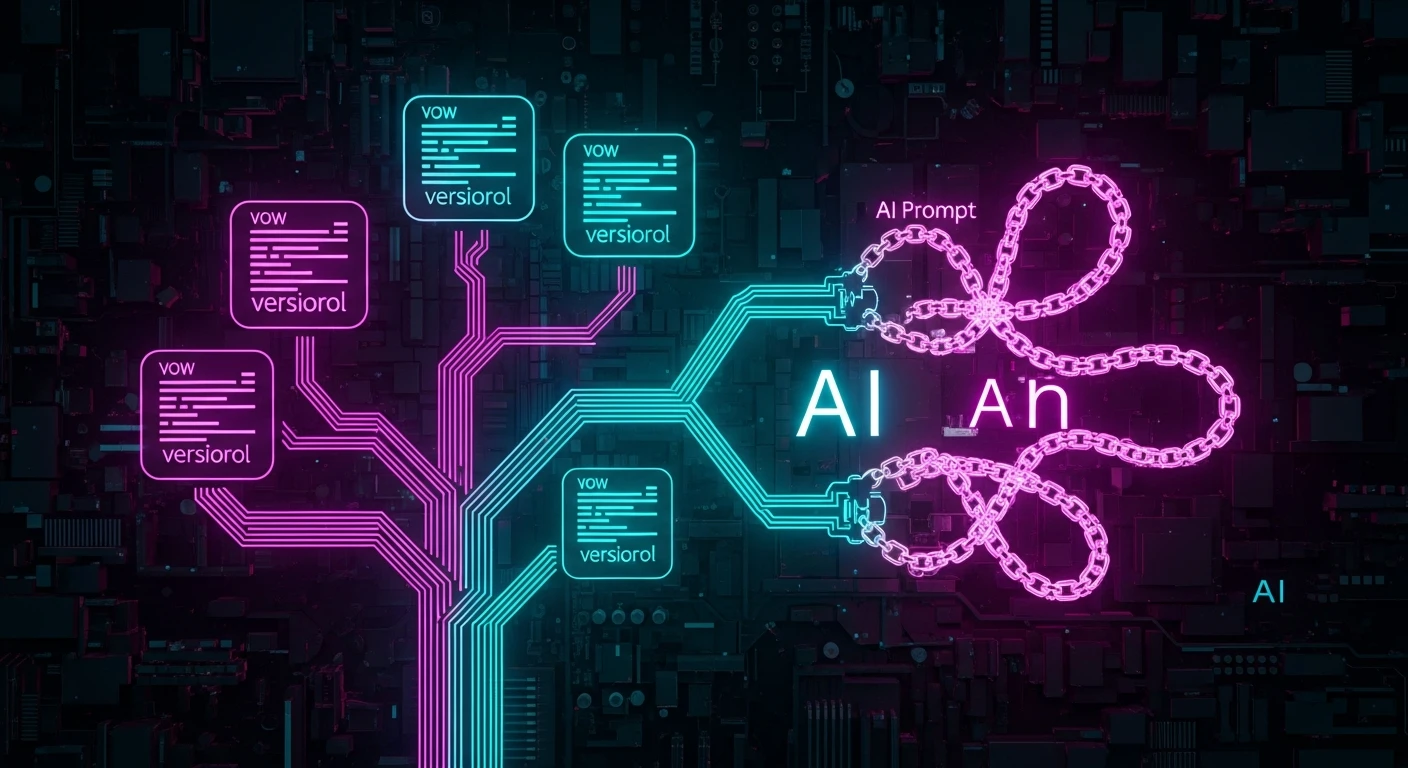
The Prompt Stability Illusion
Software engineering solved the change management problem decades ago. Semantic versioning -- major.minor.patch -- communicates the scope and risk of every dependency update. A patch is safe. A minor adds capability. A major breaks things. Everyone knows the contract before upgrading.
Prompt engineering has no equivalent discipline. Teams edit system prompts in place, deploy immediately, and discover breakage through user complaints rather than automated detection. The same prompt that powers customer-facing outputs gets modified with no formal assessment of whether the change is additive, behavioral, or breaking.
This is not a tooling gap. It is a conceptual gap. Most teams do not even have vocabulary for distinguishing a prompt patch from a prompt breaking change. Until they do, every prompt modification is a production gamble disguised as an improvement.
Why Prompts Need Version Semantics
The Hidden Contract Problem
Every production prompt establishes an implicit contract with downstream systems. That contract includes:
- Output format. Downstream parsers expect specific JSON structures, field names, and value types.
- Behavioral boundaries. Guardrails, tone, and refusal patterns that compliance teams have approved.
- Domain coverage. The scope of topics the prompt handles versus deflects.
- Reasoning patterns. The logical structure that determines how the model approaches problems.
When you edit a prompt, you potentially modify any of these contract dimensions. A "simple wording improvement" might shift the model's reasoning approach in ways that change output distributions. A "clarification" might inadvertently narrow the domain the prompt handles. Without version semantics, you have no framework for assessing which contract dimensions a change affects.
This mirrors why versioned prompt registries matter for production systems -- but registries track what changed, while semantic versioning communicates the risk of what changed. Both are necessary.
The Blast Radius Problem
In traditional software, changing an internal implementation detail has limited blast radius. Changing a public API has unlimited blast radius. The semver contract communicates this distinction to every consumer.
Prompts have the same distinction but no communication mechanism. Some changes are internal (rewording for clarity without behavioral shift) and some are external (modifying output format, changing reasoning approach, adjusting behavioral boundaries). Without version semantics, consumers cannot distinguish a safe update from a dangerous one.
Consider a prompt that powers three downstream systems: a customer-facing chatbot, an internal analytics pipeline, and a compliance monitoring tool. A prompt change that shifts output format breaks the analytics parser. A change that modifies tone affects the chatbot's brand compliance. A change that adjusts reasoning patterns might trigger different compliance flags. Each consumer has different sensitivity to different change types -- and none of them know a change is coming.
A Semantic Versioning Framework for Prompts
Patch Changes (Safe)
Prompt patches are modifications that do not change observable behavior for any downstream consumer:
- Fixing typos in instructions
- Rewording for readability without semantic shift
- Adding whitespace or formatting to prompt structure
- Updating examples that demonstrate existing behavior (not new behavior)
Patch changes can be deployed without notification or re-evaluation. They are equivalent to code refactoring that does not change tests.
Minor Changes (Additive)
Prompt minor versions add capability without modifying existing behavior:
- Adding handling for a new input category that was previously unhandled
- Extending output to include additional optional fields
- Adding new example patterns that cover edge cases
- Expanding the domain the prompt addresses
Minor changes require evaluation against existing test cases (to confirm no regression) but should not break downstream consumers. They are equivalent to adding a new API endpoint without modifying existing ones.
Major Changes (Breaking)
Prompt major versions modify existing behavior in ways that may break downstream consumers:
- Changing output format or structure
- Modifying reasoning approach or decision logic
- Altering behavioral boundaries (what the model refuses, how it handles edge cases)
- Changing tone, formality, or communication style
- Removing previously supported input handling
- Modifying guardrail behavior
Major changes require full re-evaluation, downstream consumer notification, and potentially coordinated deployment. They are equivalent to breaking API changes that require consumer migration.
Detecting Breaking Changes Automatically
Output Distribution Analysis
The most reliable breaking-change signal is a shift in output distribution. For any prompt change, run the modified prompt against your evaluation corpus and compare output distributions:
- Format changes: Parse success rate of downstream consumers
- Length changes: Statistical comparison of output token counts
- Vocabulary shifts: New terms or phrase patterns appearing in outputs
- Structural changes: JSON schema validation pass rates
- Behavioral shifts: Classification of outputs into behavioral categories
If distributions shift beyond a configured threshold, the change is flagged as potentially breaking regardless of how minor the edit appeared. This is the prompt equivalent of eval-driven development -- but specifically focused on detecting regressions from prompt modifications rather than evaluating model quality generally.
Contract Testing for Prompts
Borrow the contract testing pattern from microservices. Each downstream consumer defines a contract: the output properties they depend on. Prompt changes are validated against all consumer contracts before deployment:
- Analytics pipeline contract: "Output must contain valid JSON with fields X, Y, Z"
- Chatbot contract: "Tone must remain professional; response must address user query directly"
- Compliance contract: "Must refuse requests in categories A, B, C with specific refusal language"
Any change that violates any consumer contract is automatically classified as a major version bump. This makes the breaking-change question objective rather than subjective.
Semantic Diff Analysis
Beyond output testing, analyze the prompt change itself for semantic shift. Embedding-based comparison of old and new prompt versions can detect meaningful semantic changes even when the textual diff appears small. A single word change ("always" to "usually") might have massive semantic impact that a character-level diff would flag as trivial.
Combine semantic diff magnitude with output distribution shift for a two-signal detection system. Changes that score high on both are almost certainly breaking. Changes that score low on both are almost certainly patches. The middle ground requires human review.
Integration With Deployment Pipelines
The Prompt CI/CD Pipeline
Prompt versioning is useless without deployment integration. The pipeline should enforce:
- Change classification. Every prompt modification must be classified as patch/minor/major before deployment.
- Automated detection. The pipeline runs breaking-change detection and flags discrepancies between the claimed version bump and detected impact.
- Gated deployment. Major changes require explicit approval, full evaluation suite pass, and downstream consumer acknowledgment.
- Rollback capability. Every prompt version is immutably stored and instantly rollbackable. This builds on the principle that feature flags for AI model rollout enable progressive delivery -- prompt versions should support the same progressive rollout with instant revert.
Multi-Environment Promotion
Prompt versions should promote through environments just like code:
- Development: Any version, rapid iteration, no consumer contracts enforced
- Staging: Full evaluation suite, consumer contract validation, output distribution comparison
- Production: Only promoted versions, canary deployment for major changes, automated rollback triggers
This prevents the common antipattern where prompt changes go directly to production because "it is just a text change." Text changes to production prompts are code deployments. They deserve the same rigor.
The Organizational Challenge
Who Owns Prompt Versions?
In traditional software, the API team owns the version number and the release process. In prompt-heavy systems, prompt ownership is often unclear. Product managers write prompts. Engineers deploy them. Data scientists evaluate them. Nobody explicitly owns the versioning discipline.
Establish clear ownership: whoever approves prompt changes for production deployment owns version classification. This person must understand both the prompt's behavioral intent and its downstream consumer contracts. In practice, this means prompt deployment requires the same review rigor as configuration drift prevention in AI systems -- because an unreviewed prompt change is configuration drift by another name.
Communicating Changes to Consumers
Version numbers are communication tools. When a prompt bumps from 2.3.1 to 3.0.0, every downstream consumer knows: something breaking changed. They can review changelogs, test their integration, and decide when to adopt the new version.
This requires changelogs for prompts. Not just diffs ("changed word X to word Y") but behavioral changelogs ("output now includes confidence scores in responses; refusal behavior for category X modified to include explanation"). The changelog should be legible to both engineers and product stakeholders -- because both are affected by prompt changes.
The Broader Prompt Supply Chain
Semantic versioning for prompts is one component of a broader prompt supply chain security discipline. Just as software supply chains track dependencies and their versions, production AI systems must track prompt dependencies and their behavioral contracts.
A compound system with five prompts has five potential breaking-change surfaces. When prompts depend on each other's outputs (one prompt's response feeds another's context), the dependency graph creates cascade risk. A breaking change in prompt A might not break its direct consumers but might cascade through prompt B's behavior to break prompt C's consumers.
Mapping these dependencies and propagating version semantics through the graph is the prompt equivalent of dependency resolution in package managers. It is not glamorous engineering. It is the engineering that prevents production from breaking at 2 AM because someone "improved the wording" of a system prompt.
Practical Takeaways
- Classify every prompt change. Before deployment, explicitly label: is this a patch, minor, or major version bump? If you cannot answer, you do not understand the change well enough to deploy it.
- Define consumer contracts. Every system that consumes prompt outputs should declare what properties it depends on. These contracts are the breaking-change detection mechanism.
- Automate distribution comparison. Run every prompt change against evaluation corpora and compare output distributions. Statistical shift above threshold equals potential breaking change.
- Gate production deployment. Major prompt versions require approval, full evaluation, and consumer notification. No exceptions for "small" changes -- small changes cause big breaks.
- Maintain behavioral changelogs. Document what changed in terms of behavior, not just text. Consumers need to understand impact, not diff output.
- Store versions immutably. Every prompt version must be retrievable and deployable. Rollback should take seconds, not hours.
- Map prompt dependencies. When prompts feed other prompts, version changes cascade. Understand your dependency graph before deploying changes.
The discipline feels heavy for "just editing text." But production prompts are not text. They are behavioral specifications for non-deterministic systems that power critical business processes. They deserve the same versioning rigor that any other production specification receives -- because the cost of a silent regression in a production prompt is measured in user trust, not developer time.
Founder & Principal Architect
Ready to explore AI for your organization?
Schedule a free consultation to discuss your AI goals and challenges.
Book Free Consultation