Shadow Prompt Drift in Enterprise AI Systems: Why Invisible Instruction Mutations Evade Version Control
Your production prompts are not what you think they are. Between deployment and execution, system prompts accumulate invisible mutations -- appended context, cached prefixes, middleware injections, and runtime templating artifacts that create a shadow version of your instructions that no engineer has ever reviewed as a whole.
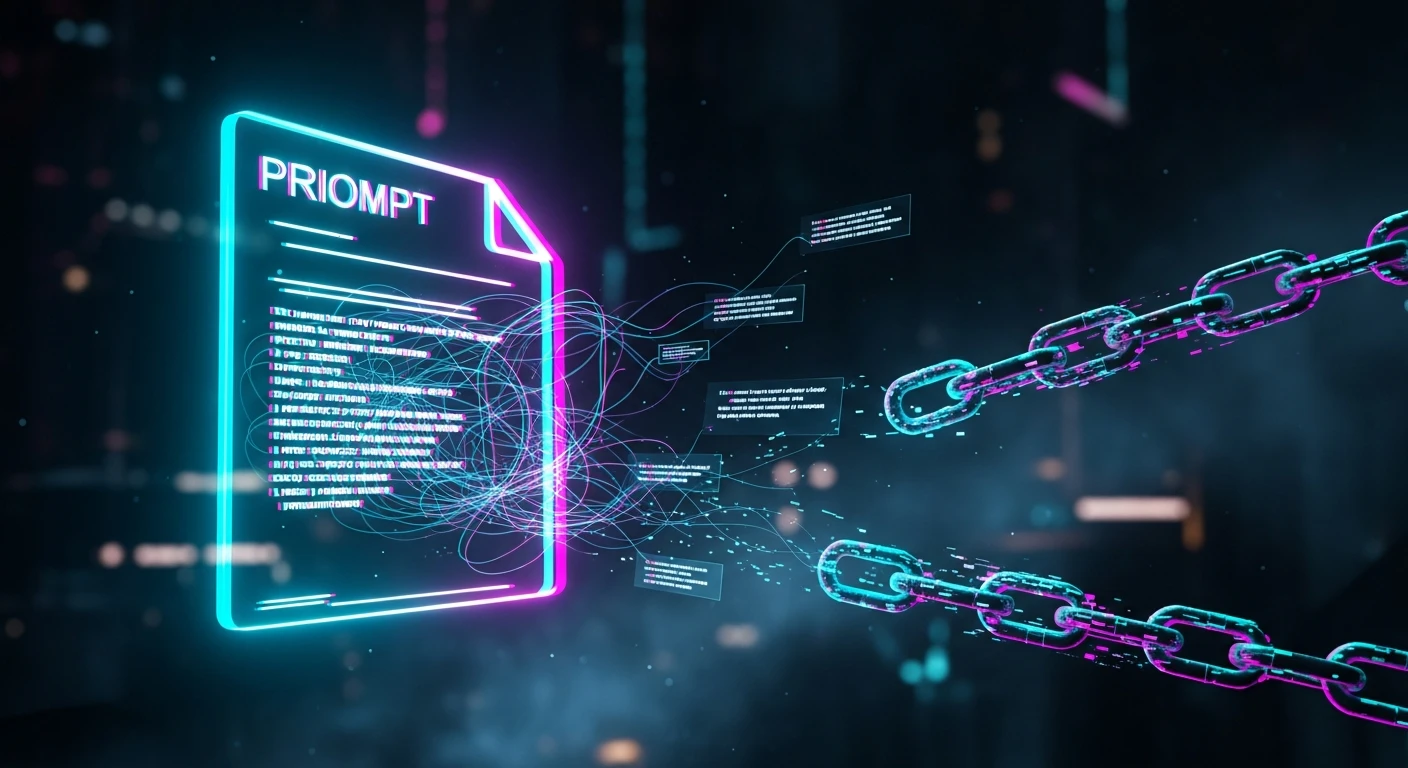
The Prompt You Deployed Is Not the Prompt Running in Production
Engineering teams version-control their prompts with religious discipline. Every change goes through code review. Every deployment is tracked. The prompt registry shows a clean history of intentional, reviewed modifications.
And yet the actual instruction set reaching the model at inference time bears only partial resemblance to what is in version control. Between your carefully crafted prompt and the model's context window, a series of invisible transformations occur -- each one rational in isolation, collectively creating a shadow prompt that nobody has ever reviewed holistically.
This is shadow prompt drift: the gradual accumulation of instruction mutations that evade version control because they originate outside the prompt management system. It is not a theoretical risk. It is happening in every production AI system with more than one integration layer.
The Anatomy of Shadow Drift
Middleware Injection Layers
Modern AI applications rarely send raw prompts to model providers. Between the application prompt and the API call sits middleware -- guardrail systems, content filters, context enrichment services, compliance injection layers. Each middleware component may prepend, append, or modify the prompt before it reaches the model.
A typical enterprise stack might include: a safety system that prepends behavioral constraints, a compliance layer that injects regulatory context, a personalization service that appends user profile data, and a retrieval system that inserts relevant documents. None of these modifications appear in the prompt registry. They happen at runtime, invisible to the version control system that tracks the "official" prompt.
The result: your version-controlled prompt might be 800 tokens. The actual instruction set reaching the model might be 3,200 tokens. Those additional 2,400 tokens constitute the shadow prompt -- instructions your engineering team never explicitly wrote, never reviewed together, and never tested as a composite.
Runtime Templating Artifacts
Prompt templates use variable interpolation to inject dynamic content. But the boundary between "template" and "content" blurs in practice. Template variables that were designed for short values (a user name, a date) gradually accumulate longer injections as product requirements evolve.
A template slot originally designed for {user_context} -- intended for "Premium tier user" -- might now receive paragraphs of conversation history, preference data, and prior interaction summaries. The template is version-controlled. The content injected into it is not. And the interaction between template instructions and dynamic content creates emergent behaviors that neither component's authors intended.
This mirrors how configuration drift in AI systems creates gaps between tested and deployed states. But shadow prompt drift is worse: configuration drift at least affects observable system parameters. Shadow drift affects the cognitive instructions that shape every output, and the affected "parameter" -- the complete prompt -- is never directly observed in production.
Cached Prefix Accumulation
Systems using prompt caching for cost optimization create another drift vector. Cached prefixes are created at one point in time, then reused across subsequent requests. If the cached prefix was generated before a prompt update, requests using that cache receive stale instructions mixed with current dynamic content.
This creates temporal drift: different requests to the same system receive different effective prompts depending on when their cache entry was created. The system appears inconsistent because it literally is -- different users interact with different versions of the prompt based on cache lifecycle.
Retrieval-Augmented Instruction Contamination
RAG systems inject retrieved documents into the prompt context. These documents are not instructions -- but the model does not distinguish between "instructions" and "context." Retrieved content that contains imperative language, opinion statements, or procedural descriptions can override or modify the intended behavior established by the system prompt.
A knowledge base document that states "always prioritize customer safety over speed" becomes an instruction the moment it enters the context window. If this contradicts the system prompt's guidance to "optimize for response time," the model must resolve the conflict -- and it may not resolve it the way you intended. The retrieved document has become a shadow instruction that evades all prompt governance.
Why Standard Version Control Fails
The Composition Problem
Version control tracks files. Prompts are files. So prompts are version-controlled. This logic is correct but incomplete. What reaches the model is not a file -- it is a runtime composition of multiple sources that only exists ephemerally during inference.
No version control system tracks the composition. You can review the prompt file, the middleware configuration, the template variables, the cached prefixes, and the retrieved documents individually. But the composite -- the actual instruction set the model processes -- exists only in the model's context window, for the duration of one request, and is never persisted anywhere reviewable.
Teams that have implemented versioned prompt registries have solved half the problem. They track intentional prompt changes rigorously. But the shadow prompt lives in the other half -- the unintentional, emergent composition that the registry never sees.
The Observability Gap
Most AI observability systems log the model's response. Some log the user's input. Very few log the complete prompt sent to the model -- the full composite including all middleware injections, template interpolations, and retrieved context. This means the shadow prompt is not only unversioned but unobserved.
When output quality degrades, teams inspect the prompt registry (unchanged), the model version (unchanged), and the application code (unchanged). They conclude the model provider degraded quality. In reality, a middleware update three layers deep modified the effective prompt in a way that conflicts with the original instructions. But nobody can see this because nobody logs the composite.
This represents a fundamental gap in observability for AI systems. Traditional AI observability focuses on outputs, latency, and error rates. Shadow prompt drift requires observability at the composition layer -- logging and analyzing the full instruction set that actually reaches the model.
Detection Strategies
Composite Prompt Logging
The first defense: log the complete prompt (or a hash of it) for every inference request. Compare the logged composite against the expected composite (system prompt + expected middleware additions). Alert when the delta exceeds a threshold.
This is expensive at scale -- full prompt logging multiplies storage requirements significantly. A practical compromise: sample 1% of requests for full composite logging, hash 100% of composites, and alert when hash diversity exceeds expected variation (which should only come from dynamic content, not from instruction changes).
Differential Analysis
Periodically extract the non-dynamic portions of production composites and diff them against the versioned prompt. Any instruction-like content that appears in the composite but not in the version-controlled prompt constitutes shadow drift.
Automate this with a pipeline that: (1) captures production composites, (2) strips known dynamic content (user data, retrieved documents, timestamps), (3) diffs the residual against the registered prompt, and (4) flags undocumented instruction content for review.
Behavioral Regression Baselines
Shadow drift manifests as behavioral change. Maintain a regression suite of prompt-output pairs that exercise the full production pipeline (not just the isolated prompt). When outputs drift from baselines, the composite prompt is the first place to investigate.
This connects to eval-driven development practices -- but extends them to test the full composition stack rather than the prompt in isolation. Your eval suite must exercise the production path, including all middleware, to catch drift that only manifests in composition.
Mitigation Architecture
The Prompt Assembly Contract
Define an explicit contract for prompt composition. Document every source that contributes content to the model's context window. Assign ownership for each contribution source. Require that changes to any contributing source trigger prompt regression tests.
This transforms shadow contributions into documented, governed contributions. Middleware that injects safety constraints is no longer invisible -- it is a declared composition participant with version tracking and change review requirements.
Composition Freezing for Critical Paths
For high-stakes workflows (financial decisions, medical information, legal advice), freeze the complete composition rather than just the prompt. This means pinning middleware versions, caching retrieved content sets, and fixing template interpolations to produce deterministic composites that can be reviewed and approved as a whole.
This sacrifices dynamism for governance. The composition cannot adapt to new context or updated knowledge bases without explicit unfreezing and re-review. For critical paths, this tradeoff is correct -- the cost of ungoverned drift exceeds the cost of stale context.
Layered Audit Boundaries
Establish clear boundaries between prompt layers and audit each independently. Layer 1: system prompt (version-controlled, reviewed). Layer 2: middleware injections (configuration-controlled, change-tracked). Layer 3: dynamic content (schema-validated, boundary-tested). Layer 4: retrieved context (relevance-scored, instruction-filtered).
At each boundary, validate that the contribution conforms to its expected role. Retrieved documents should not contain imperative language. Template interpolations should not exceed their declared token budget. Middleware injections should not contradict system prompt instructions.
The principles of data contracts for AI pipelines apply directly: each layer in the composition stack should have a contract defining what it may contribute, and violations should trigger alerts rather than silently corrupting the composite.
The Organizational Dimension
Shadow prompt drift is not purely technical. It emerges from organizational structures where different teams own different layers of the composition stack. The prompt engineering team owns the system prompt. The platform team owns the middleware. The ML team owns the retrieval pipeline. The compliance team owns the safety injections.
No single team sees the composite. No single team is responsible for the interaction effects between layers. And no single team has the authority to enforce composition governance across organizational boundaries.
Solving shadow prompt drift requires either: (1) a composition owner role with cross-team authority over the full instruction stack, or (2) automated composition governance that enforces contracts regardless of which team modifies which layer. Most enterprises need both -- human oversight for novel composition patterns and automated enforcement for known constraints.
The alternative is what most enterprises have today: production AI systems running on instruction sets that nobody has ever reviewed in their complete form, drifting silently toward behaviors that no engineer intended and no governance process approved.
Founder & Principal Architect
Ready to explore AI for your organization?
Schedule a free consultation to discuss your AI goals and challenges.
Book Free Consultation